
Spring Valley City Directory Shelf Map
The historical shelf for Spring Valley is a Rockland County collection rather than one proven run of village volumes. The 2026 county reference guide describes the New City Library Rockland Room as a prime research collection of about 4,000 volumes. It confirms the county telephone-book run, reverse directories, census material, maps, and newspaper microfilm. The guide does not name a Spring Valley city-directory publisher or publish an exact Spring Valley run. That absence matters. A catalog or shelf inquiry is better than calling an unverified title a local directory.
| Collection | Years | Where held | Access |
|---|---|---|---|
| Rockland Room reference collection | Title-level Spring Valley run not published | New City Library Rockland Room | Ask staff for a shelf or catalog check |
| Rockland Cross Reference Directories | 1978-1999 | New City Library Rockland Room | Reference shelf and reading-room lookup |
| Rockland County telephone books | 1910-1998 | New City Library Rockland Room | Microfilm/reference use |
| Ramapo Valley Independent | 1927-1954 | LARC Digital Collections | Online historical-newspaper collection |
| South of the Mountains | 1957-2013 | Historical Society of Rockland County | Searchable PDFs online |
For an early Spring Valley household, begin with the record nearest the year in question. A late twentieth-century address may appear in the Cross Reference Directories, while an earlier name may be easier to place through telephone microfilm or newspapers. The county shelf is also a useful fallback when an online search gives only a partial name match. Note: A reverse listing can identify an address lead, but it does not establish ownership or every person in a household.
Spring Valley Directory Research Room
The Rockland Room is the practical starting desk for a Spring Valley directory question that needs a physical volume, microfilm reel, atlas, or clipping file. The county guide groups its directory material with historical census resources and local newspapers. Give the staff a narrow request: the name or street, an approximate year range, and whether the goal is a shelf citation, page reference, or scan. That makes it easier to decide whether the Cross Reference Directories, telephone books, newspaper reel, atlas, or clipping file is the strongest first source.
Finkelstein Memorial Library in Spring Valley is the local public library, but the reviewed official material did not publish a detailed city-directory or obituary inventory for it. The New City collection is therefore the documented county-level route. The Genealogical Society of Rockland County also supports research through its reference collection at the county archives and projects involving census, cemetery, church, and funeral-home records. Use the source that fits the date rather than expecting a single book to answer every household question.
Research tip. Ask for the exact title and page before recording a directory citation, because Spring Valley publisher and year-run details were not published in the reviewed sources.
Spring Valley Newspaper Names
Newspapers supply the names that a directory volume can miss. The Rockland Room reports Journal News and Rockland Journal News coverage from 1850 to the present, City and Country for 1860 and 1869-1916, Nyack Evening Star for 1892-1917, Rockland County Messenger for 1847-1873 and 1884-1896, and selected Rockland County Times runs. These titles are county resources, not Spring Valley-only publications, so use a surname with a street, business, organization, or village name to reduce false matches.
The LARC Digital Collections provide a useful online complement, including the Ramapo Valley Independent, Rockland County Journal additions for 1900-1915, and Our Town for 1978-1982. Search an OCR result as a lead, then examine the page image and compare it to a directory, deed, or census record. Spelling, initials, and transliterations can differ from one source to another.
LARC Digital Collections shows the digital archive route for Spring Valley directory research and related newspaper work.
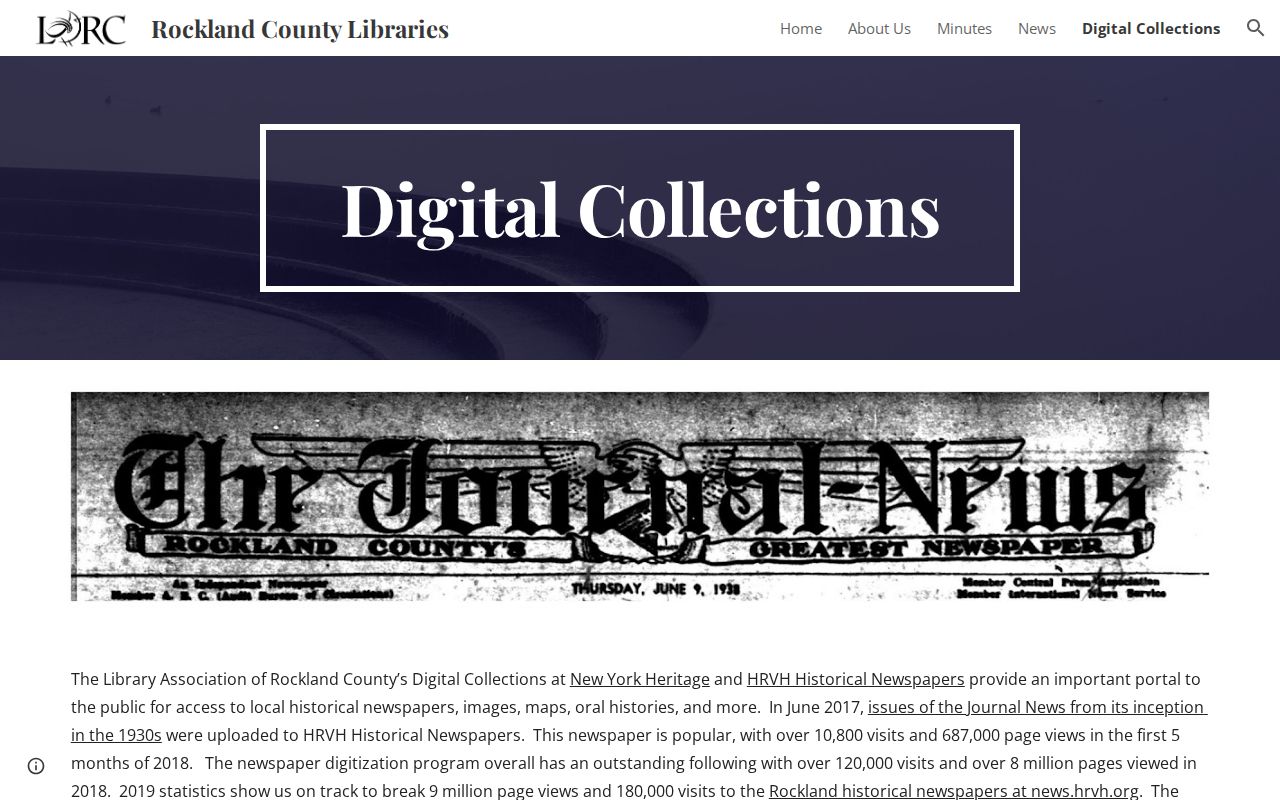
The online collection helps locate a notice or address reference, while the Rockland Room shelves and microfilm remain important for the verified local runs.
Spring Valley Collection Gaps
There is an honest limit in the Spring Valley directory record. Researchers located the 1978-1999 Cross Reference Directories and the 1910-1998 county telephone-book run, but not an official source naming a city-directory publisher or exact Spring Valley publication span. Do not fill that blank by assuming a Polk edition, a continuous annual issue, or a sample format. The local collection is still useful, but its title, edition, and section must be verified from the volume in hand.
When a year is missing, change the channel. Try a telephone book on either side of it, a newspaper notice, a county tax roll, or the closest census. For a stubborn name, ask the Rockland Room whether an atlas, clipping file, or interlibrary loan record covers the gap. The same approach prevents an apparent disappearance from becoming an unsupported claim that a family left Spring Valley.
Note: Record the source title, publication year, page, and whether the entry came from an alphabetic or address-order section for every useful find.
Reading Spring Valley City Directory Entries
No digitized Spring Valley city-directory page was found in the official or library collections reviewed. The items below are therefore a scan inventory, not a claim about a particular local volume. When staff produce a directory, telephone book, or reverse listing, photograph or transcribe the heading and abbreviation key before extracting a name. Preserve the exact spellings and punctuation. A small notation can separate a spouse, business address, or residence from a nearby entry.
| Printed name | Record initials, suffixes, and spelling exactly as the page shows them. |
|---|---|
| Relationship note | Look for a spouse, parenthetical relationship, or widow notation if the volume uses one. |
| Work or business text | Capture any occupation, employer, or business wording without treating it as proof of residence. |
| Street reference | Keep the number, street suffix, and whether it appears in an alphabetic or reverse section. |
| Page context | Note the year, page, and abbreviation key so another reader can check the same entry. |
- Criss-cross directory
- An address-order directory that can point from a street number to a listed occupant or business. Rockland’s verified run is 1978-1999.
- Householder index
- An alphabetical index organized around a principal listed person, which may omit other people in the home.
- Abbreviation key
- The printed explanation for shortened terms and symbols. Read it before interpreting any mark beside a name.
Use a transcription worksheet that keeps the source title and page beside each extracted field. That practice makes a later correction possible when a surname, street suffix, or shorthand mark has been read incorrectly.
Spring Valley City Directory Census Pairing
A directory finding becomes much stronger when paired with the nearest census, deed, or tax roll. Federal schedules are public through 1950 under the National Archives release cycle. GSRC identifies New York census material through 1925 by town, while its collection also offers older federal census books. A directory can show address continuity from year to year; a census can add household relationships, ages, birthplace, and occupation. Neither replaces the other.
- Find the surname or address in the closest available Spring Valley directory source, telephone book, or reverse listing.
- Write down the street exactly, including its suffix, householder name, initials, and the page citation.
- Check the nearest public federal or New York census for the household and town label.
- Compare the place, spelling, age pattern, and neighbors with a deed or tax-roll reference.
- Use a later newspaper notice, obituary, or probate record only after the household trail is anchored by date and address.
A change in address may signal a move, subdivision, marriage, death, or a different entry practice. It is not proof by itself. The three-source cluster of directory, census, and deed or tax roll is especially helpful when the entry lists only a head of household.
Spring Valley Census Clues
The Genealogical Society of Rockland County 1892 census search is a useful bridge for Ramapo-era people before modern address systems. Its fields include first name, last name, year born, a plus-or-minus year range, town, district, and page. The search is not case-sensitive. A question mark matches one character and an asterisk matches zero or more characters, which helps when a surname has an uncertain vowel, ending, or transliteration.
GSRC's combined records search adds fields such as maiden name, birth and death places, cemetery, spouse, parents, source, book, and page. It is a historical index or transcription, not a certified record. Use a result to request the cited book or page, then retain the source detail in research notes. This is also a sound way to test whether a person who drops out of a telephone book appears under a variant name elsewhere in Rockland County.
Note: A wildcard search can broaden a surname too far, so narrow the result with town, year-born range, district, or a second family name.
Spring Valley City Directory Map Context
The Library of Congress Spring Valley Sanborn map offers seven public-domain sheets from August 1918. The sheets show building footprints, construction material, stories, use, nearby structures, and street layout. They do not name residents. Use the map to test whether an address or structure existed, then join it to a directory lead, deed chain, census, or newspaper. It is a built-environment source, not a household roster.
Historic labels need the same care. A Census Bureau historical table records that a portion of Clarkstown was annexed to Spring Valley in 1945. Older census or tax entries can therefore use Clarkstown or a “part” label for an area now associated with the village. Keep both the historic place name and the modern Spring Valley label in notes, and use the legal description or map context before rejecting a result.
The Historical Society of Rockland County research collection is another source for Spring Valley directory context, local publications, and archival leads.
The historical society’s repository context can help connect a printed directory reference with local history, while the original listing still needs its own page citation.
Spring Valley Archive Trail
Rockland County’s historical record trail extends well beyond directory books. The county archives preserve original deeds from 1798-1907, mortgages from 1798-1931, census books from 1855-1925, Ramapo assessment rolls from 1855-1964, maps, and related indexes. The archive facility was established in 1987 and moved into a purpose-built, climate-controlled 15,800-square-foot building in 1998. Its more than 33,000 cubic feet of holdings are the fallback when a name is absent from the online or library layers.
Use the archives for the historical record type, New City Library for reference books and newspaper microfilm, and the County Clerk for current land or court counter services. Those are different custodians. A narrow request with a street, surname, approximate era, and record type is more likely to reach the correct collection. For a family tied to a parcel, pair the directory clue with the deed legal description or a Ramapo tax-roll entry rather than relying on a street name alone.
Spring Valley City Directory Family Trail
For family history, track one household through each available Spring Valley directory source instead of assembling isolated name matches. Begin with the first confirmed address. Move forward and backward through the Cross Reference Directories, telephone books, newspapers, and census schedules. Capture the exact place label used at the time. A later deed, tax roll, obituary, or probate file may explain a move or an absence, but it should not be used to guess who occupied the address in an unverified year.
The historical volumes and microfilm sit alongside current address tools, but they answer a different question. When the aim shifts to a present parcel, use the Spring Valley street directory for the address-keyed public-record route. When an old directory entry needs a modern identity check, match at least two independent identifiers before treating the names as the same person.
Use historical records responsibly. Spring Valley research can support family history, estate work, and local history, but public records must never be used to stalk, harass, or harm anyone.